This Blog post will focus on my acquisition of useful primary sources for my research paper over the history of Apartheid in South Africa. Given the fact that my research paper covers the history from Early Dutch and English settlement in South Africa all the way up to the end of South African Apartheid with the election of Nelson Mandela as President, I believe that it is important that these primary sources be hard hitting and mark major points in the formation and eventual demise of the Apartheid system. With this being said, I have selected two primary sources which cover two critical points in the rise and fall of South African Apartheid. These sources include the South African National Party’s official statement to the United Nations regarding the Apartheid system, and the second, a speech from Nelson Mandela’s Presidential Inaugural address. I have chosen these two points in South African history because between these two events, we can see the official legal beginning of Apartheid system in South Africa, as well as the beginning of the end of the Apartheid system with the election of Nelson Mandela as President.
My first Primary source comes from a Statement from the South African National Party at a United Nations General Assembly which was given on March 29, 1948. This source essentially details the Party’s Justification for the Apartheid System (Afrikaans for “separateness” or “the state of being apart”) by stating that if the nation did not segregate these races then the consequence would be social suicide for the white race, and thus the entire nation, as the National Party saw white Europeans as the superior and most important race. Next, the Party defines the three classes of this Apartheid system which include the White Europeans at the top of the social ladder, the so called ‘Coloured Community’ which consisted of anyone who was neither completely White or a native in the middle , and finally the natives or Blacks which were the lowest social class under the Apartheid system. The source goes on to discusses several rules of Apartheid such the prohibition of European and non-European intermarriage, establishing a set of so called “experts” in Non-european affairs to deal with the members of the lower social class and to create a buffer between the White Europeans and the other classes, and even restrictions on voting for Non-europeans. I believe that this source will prove incredibly useful for use in my research paper, as it provides an official statement from South Africa’s National Party to the United Nations on the segregation of apartheid. I plan to use this primary source an an example of the early stages of the Legal side of apartheid, as this statement essentially defined the apartheid’s justification in the racist belief that apartheid was the only way which white Europeans could ensure that South Africa would be successful by their own definition, which involved keeping all non whites out of positions of power. This primary source also opens up the possibility of who was in power when this statement was given, as It will most likely reflect a trend of white Europeans in positions of power urging this time which allowed them to oppress those of lower social class. This also provides an interesting look into a few apartheid laws which mirror the racial segregation laws in he United Staes at the time. I believe comparing Jim Crow laws and these Apartheid laws will be useful in connecting this seemingly distant idea of South African Apartheid to a concept that many people understand and have learned about in the past and could prove to be an interesting argument in my research paper.
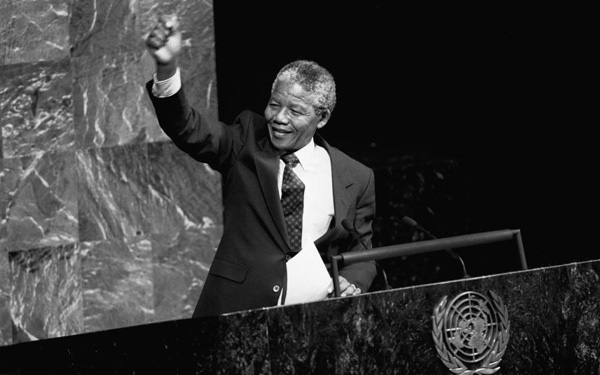
My second source is a speech which was given my Nelson Mandela at his presidential inauguration in Cape Town on May 9th, 1994. The speech begins with Mandela providing a history of the Origins of Apartheid in South Africa tracing the system’s roots back over three centuries to the earliest European settlements in South Africa. Next, Mandela moves on to discuss Robben Island, the small prison island off the coast of Cape Town which Mandela spent eighteen of his twenty-seven years of imprisonment. Mandela discusses the island and its propose for over three centuries as a prison for outcasts and seemingly dangerous political activists such as himself. Next, Mandela discusses the history of South Africa’s bill of rights beginning with the original bill of rights written in 1923, through the Freedom Charter of 1955, and even changes up into the 1990s, just a few years before Mandela’s speech. Following this, Mandela Discusses the importance of this moment in South African history, the democracy which had once been used to oppress the majority was now being used by the majority for the purpose of equality. Finally, Mandela concludes his inaugural address to predict and discuss the difficult times ahead of not only Mandela’s presidency but the nation as a whole as the nation for the first time ever would have to grapple with a new question, How can a nation defined by Separateness and racial segregation come together as one united nation? I believe hat this speech is incredibly useful not only for use as a primary source in my research paper but also as a tool for delving further into smaller aspects of the Apartheid system which I had previously overlooked. Including the Freedom Charter of 1955. I believe that this source will also tie in well with the first source with the theme of analyzing who was in power when these Social changes were made which supported the continuation of Apartheid practices. I believe that Mandela structured his speech with such a historical fused lens to rally the country and to build a sense of pride in just how far the Anti-Apartheid movement had come in its fight against the system which had before Mandela’s election, oppressed the majority. This speech also provides an interesting insight into the time period surrounding Mandela’s election which were extremely tense and uncertain times as the nation wrestled with the idea of what would happen next as he entire nation turned their eyes to Mandela to se how he would answer their question.
I believe that these sources will provide me with a solid staring point for my primary sources which I will implement into my final research paper. Through finding these sources I was able to locate several useful databases and collections of speeches for the purpose of locating more primary sources as I necessary. With this being said, however, I believe that these sources will prove to be extremely useful as I continue work on my research paper and I am excited to dive further into this topic.
Finding Primary Sources about Apartheid
 Adam's Blog