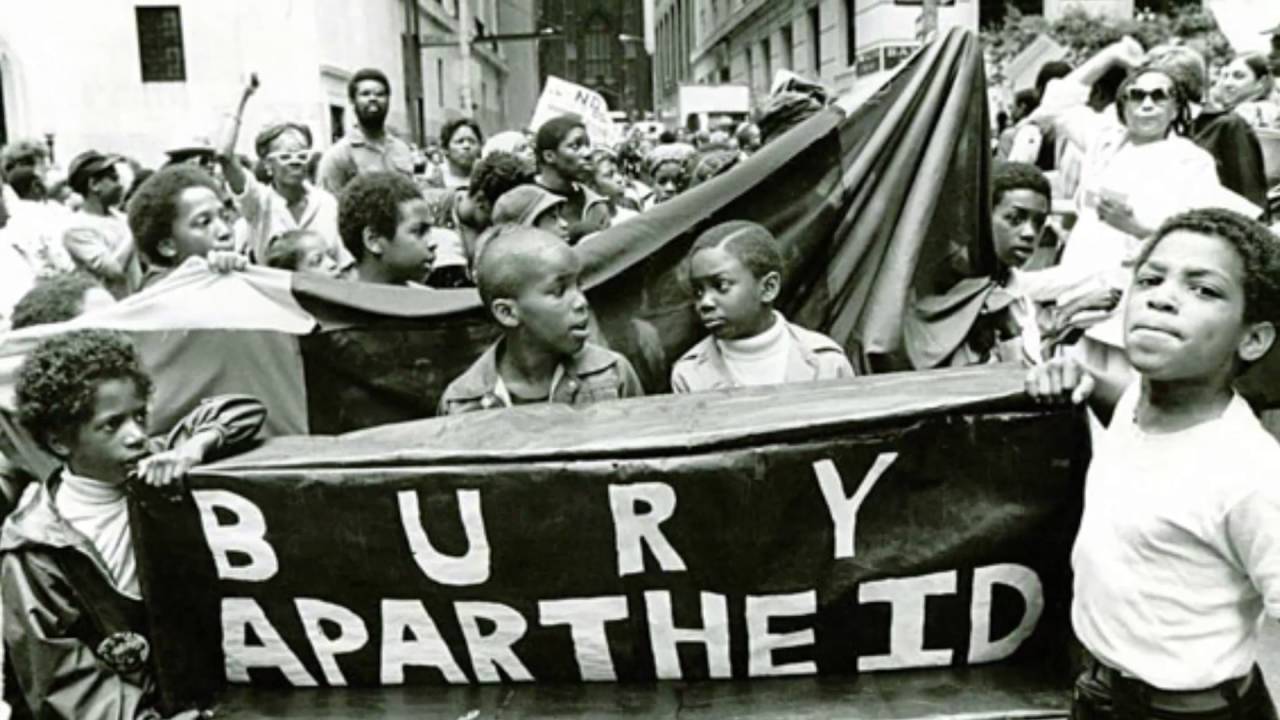
After drafting my previous post and settling on the topic of the History of South African Apartheid, I went to work on the research section of the project. Well, more accurately, I spent about a week procrastinating and as the due date quickly approached Then I went to work on the research portion of this project. This portion of the project proved to be more challenging than I had originally anticipated, as Upon delving into the databases of Kent Library I discovered that the Library had very little regarding the history of South African Apartheid. This was due to the fact that most of the scholarly secondary sources within the Kent Library databases focused primarily on the period after the end of Apartheid. This Post-Apartheid period was an area which I was not planning on covering with much detail as I was more interested in covering the broad historical scope of Apartheid from its origins in segregation under the English and Dutch settlers all the way up to the election of Nelson Mandela. Due to this difficulty, I reached out to my Professor, Dr. Soland and told him about my difficulty finding historical sources and asked for any suggestions he might have. After speaking with Dr. Soland about this issue he got me into contact with another professor named Dr. Joseph Snyder as he had previously taught a course which had focused on Apartheid in South Africa. Dr. Snyder was able to send me some recommendations for useful historical sources including a collection of sources which he had added to Kent Library last year. Needless to say, I was thrilled to find this research, however after about an hour of searching I discovered that none of the sources Dr. Snyder had suggested were currently available. After some brief correspondence, Dr. Snyder and I arrived at the conclusion that I would need to submit an Interlibrary Loan for most of the works which were suggested and thus would not be able to incorporate these sources into this blog post, so I shed a single tear and moved on with the research process with the sources which I was able to find in the Kent’s online Library.
My first source which I was able to find was an eBook titled Segregation and Apartheid in Twentieth Century South Africa by William Beinart and Saul Dubow. This source as the tile suggests, covered the origins of segregation and build up to Apartheid in South Africa in the twentieth century.I found this source through Kent Library’s articles and databases And I do believe it to be scholarly, as research into the authors shows that they have written several other scholarly sources as well as being historians at Cambridge and the University of London respectively. This source was published in 1995 however, I believe that the source is up to date and provides useful historical context from early 90’s which was around the time apartheid was being dismantled. For the section which I am interested in analyzing, the author’s main focus is regarding the origins of segregation from the early days of English and Dutch settlement in South Africa and how that segregation mutated into the Apartheid system following decolonization in the early 20th century. The authors use several analytical lenses throughout this section including a sociological lens by analyzing the formation of the social structures of segregation and their transition to the system of apartheid. The author also uses a global historical perspective to analyze the global context not only of the origins of apartheid, but also to the reaction to the system throughout the 20th century. Throughout the source, the authors reference a plethora of newspaper articles from the 20th century as well as supplementary sources regarding Apartheid during this time period. I plan to incorporate this source into my research paper, primarily to address the early formations of the history of apartheid, beginning with the Dutch and English settlement of South Africa, the beginning and evolution of racial segregation in South Africa, and this system of segregation’s mutation into the oppressive system of Apartheid following the decolonization of south Africa in the early twentieth century.
My second source is a chapter titled “The dynamics of anti-apartheid: international solidarity, human rights and decolonization” and comes from chapter five of a book published in 2017 titled Britain, France and the Decolonization of Africa: Future Imperfect? I accessed this journal through Kent library’s JSTOR journal database with the scholarly sources checkbox on. This source is scholarly as it is peer reviewed and published by UCL Press, which is the University Collage of London’s open access university press which publishes a wide range of scholarly sources. The source aligns well with modern ideas and ways of thinking as it is only three years old and it presents an interesting look into the civil rights issues associated with South African segregation and Apartheid. The author approaches the issue of apartheid and decolonization mostly from a civil rights historical lens by often comparing south Africa’s decolonization to other areas of the world’s decolonization. The author also focuses mostly on the civil rights issues with the Apartheid system. The author’s main idea of this chapter is how the Decolonization of South Africa led directly to the formation of an Apartheid system. The author supports this idea by delving into the specific civil rights issues which arouse from the nation’s segregation and eventually Apartheid practices. From What I can tell, the author does not directly analyze any primary sources on apartheid, however, the author does cite a variety of other scholarly articles or journals of further research on the topics. This does present the issues associated with not directly referencing any primary sources which I believe the author is missing out on a variety of useful resources. I plan to use this source in relation with my first source about segregation and decolonization. I believe using this source in addition to my first source will allow me to delve into the issues of segregation and the a more in-depth look at the civil rights violations which South Africans of color were facing during the first half of the twentieth century.
My next source which I have selected is a journal article from The Journal of Southern African Studies titled “The Moral Foundations of British Anti-Apartheid Activism, 1946-1960”. I Found this article trough Kent Library’s JSOR database and I would consider it an extremely credible source given its inclusion in the Journal of South African Studies and the plethora of citations included. This particular journal was published in 2009, which despite being just over ten years old I believe that it still supports modern ideas on the topic of the history of Anti-Apartheid in South Africa. The author’s main focus within this source is to inform readers of the anti-apartheid religious movement in both Britain and South Africa itself which popped up during the late 1940s and persisted through the 1950s. Throughout the article, the author uses a variety of specialized journals and other works as background and to include major details of the Anti-apartheid movement. Along with this the author uses a variety of letters or proposals regarding Apartheid in South Africa including the Collins Papers and the papers from the African Bureau. Finally, the author also uses several periodical magazines from the apartheid period including British weekly, Church Weekly, and Observer. I believe that this variety of sources will prove to be useful to not only for this article in particular as well as a jumping off point for delving into these primary sources and incorporating them into the final paper. The author primarily focuses on the formation of anti-apartheid beliefs and observes the events from the lens of civil rights reforms as well as a religious and historical lens to address how the South African as well as British Christian churches were the first to take strides to create an anti-apartheid movement and bring an end to the Apartheid system in South Africa. I plan to use this article within my final paper in order to address the history of apartheid (or in the case of this article the history of the anti-apartheid movement during the mid to late 20th century). I plan to mostly focus on the larger picture of the article, which is the anti-apartheid movement, however, I will most likely delve into the religious institutions which had a hand in the formation of the anti-apartheid movement during the mid-twentieth century.
My next source is another journal article from The Journal of Southern African Studies and this article is titled “The British Anti-Apartheid Movement and Political Prisoner Campaigns, 1973-1980”. I Found this article trough Kent Library’s JSOR database and I would consider it a credible source given its inclusion in the Journal of South African Studies however, this article has far fewer primary sources than the previous source from this journal. With this being said, however, there are a few primary sources included in this article such as interviews and official government trial papers, however, the majority of the article’s sources are other secondary sources regarding the topics which the author discusses. I do not that this necessarily affects the credibility of the source, as the sources used are all very useful and credible. The main idea of this article analyzes the activities of the Anti-apartheid movement discusses in my previous source and how they publicized the political prisoners and other detainees who were victims of the Apartheid system. The author delves into a few particular cases, mot notably the imprisonment of Nelson Mandela. The author also discusses the effects of the Anti-apartheid movement had on political change and the formations of liberation movements like the African National Congress. This article uses a variety of analytical lenses to discuss their topic but most notably is the historical lens of civil rights and the global scope foreign policy of apartheid during the 1970s and 1980s.I plan to use this article following my previous article to build on the roles of the Anti-Apartheid movement following its formation in the 1940s and how it evolved into the 1970s. I also plan to use this source as the foundation for my introduction to Nelson Mandela, and provide context on who he was, why he was imprisoned, and his role in the end of Apartheid.
My next source comes from The Journal of the American Academy of Religion and is titled “In Memoriam: Nelson Rolihlahla Mandela (1918–2013)”. This journal was published in 2014, just a year following Mandela’s death. Believe that this source provides a good look into the modern opinion of Mandela while also taking the time to submit a neutral perspective on Mandela’s life rather than simply capitalizing on Mandela’s passing. The As the title suggests, the article is the Ebrahim Moosa’s memoriam for Mandela where the author discusses the life of Mandela and his role as apolitical figure. The author’s main points of the article is the positive change which Mandela was able to accomplish throughout his life and even writes of how Mandela was proof that positive change can come from the bottom to the top. The author also focuses heavily on Mandela’s political career and some of the issues which were facing South Africa in the last decade of the twentieth century. The author provides a variety of primary sources throughout this article incorporating his own personal experience with Mandela, as well as information from Mandela’s biography and even a few secondary sources for elaboration on the African philosophy. The author mainly employs a historical and sociological lens when analyzing the life and career of Nelson Mandela. I believe that this lens is useful for me, as it allows me to see the history and major events of Mandela’s political career and to understand the later part of Mandela’s life. I plan to implement this article into my final paper by using it to analyze Nelson Mandela after being release from Robin Island as well as tying this source into my source on the Anti-Apartheid movement in the 1970s and 1980s which discuses the arrest of Mandela and his role as a political prisoner under apartheid.
These proceeding articles will make up the majority of my sources which I plan to implement into my final research paper on the topic of the History of Apartheid in South Africa. I believe that these journals and readings will provide me with sufficient secondary sources which I will need to compose the majority of my historical look at the system of South African Apartheid. This topic seems more and more interesting the more I delve into it, a topic which is so often overlooked in most high school and even college classrooms across the country and in many ways one of the major civil rights issues of the twentieth century I look forward to diving into my research paper and expanding my and any one who reads this blog’s understanding of the issue of South African Apartheid.
 Adam's Blog